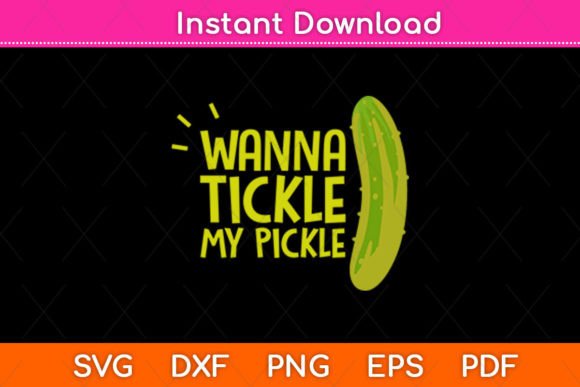
Wanna Tickle My Pickle SVG: An Embroidery Review
As a professional embroidery digitizer and product reviewer, I approach every new graphic with a specific question: will this translate from a screen to fabric without losing its charm? When evaluating the Wanna Tickle My Pickle Svg Design, my first impression is one of playful nostalgia mixed with modern crafting utility. This design carries a distinct personality that sits comfortably at the intersection of humor and cottagecore aesthetics. For those of us in the Crafts and Graphics space, finding artwork that balances whimsy with stitch-ability is rare. The layout suggests a bold, illustrative style that feels less like rigid clip art and more like a hand-drawn sketch, which is exactly what today’s market craves for personalized goods.
Translating Vector Lines to Stitch Paths
The primary challenge with any SVG intended for cutting machines is adapting it for needle and thread. While the Wanna Tickle My Pickle Svg Design is marketed for Cricut and Silhouette users, its potential as an embroidery project foundation is significant. Visually, the design relies on clear outlines and distinct shape separation. From a digitizing perspective, this is excellent news. Clean vectors mean cleaner auto-digitizing results or easier manual tracing. The shapes appear substantial enough to support a satin stitch border without becoming too dense, while the internal areas offer ample room for creative fill stitch textures.
However, because this is originally a cut file, you must verify the line weight before stitching. Vectors designed for vinyl often have uniform thickness, whereas embroidery requires variable density based on fabric type. I recommend treating this as a template rather than a finished machine embroidery design. Use the SVG to create your own custom digitized version, ensuring you add appropriate underlay stitches to prevent puckering, especially if you plan to use this on stretchy knits or textured linens.
Real-World Application: The Custom Apron Test
To truly judge the viability of this design, I mentally placed it in a real-life production scenario. Imagine preparing a custom embroidered apron for a client who loves gardening and pickling. This is where the Wanna Tickle My Pickle Svg Design shines brightest. The theme naturally lends itself to kitchenware, garden apparel, and novelty gifts. On a canvas or denim apron, the design would serve as a fantastic centerpiece.
In this scenario, I would likely treat the main pickle element as an applique design. Using a green cotton fabric for the vegetable and a contrasting thread for the facial features or text adds tactile depth that flat stitching cannot achieve. The humor of the phrase pairs perfectly with the functional nature of an apron, making it a high-value handmade product. Customers buying from Etsy sellers or craft fairs are looking for items that spark conversation; this design delivers that immediate emotional connection. It transforms a standard utility item into a memorable personalized gift that feels bespoke rather than mass-produced.
Navigating Fabric Choices and Stabilizer Needs
While the design is versatile, placement matters immensely. I would exercise caution when applying this to highly textured fabrics like terry cloth towels or thick fleece. The intricate details implied by the "tickle" concept could get lost in the pile. If you must use textured fabric, consider adding a water-soluble topping to keep the stitches crisp. Conversely, on thin fabrics like baby onesies or lightweight tea towels, stitch density becomes the enemy. A heavy satin outline combined with a dense fill can cause the fabric to tear or pucker irreparably.
For baby embroidery or delicate garments, I advise simplifying the design. Convert solid fills to running stitches or light tatami fills to maintain drape and softness. Always test your stabilizer choice on scrap fabric first. A cut-away stabilizer is generally safer for knit custom apparel like sweatshirts, while a tear-away might suffice for stable woven cottons used in tote bags. Remember, just because the SVG looks perfect on your monitor does not mean it will stabilize correctly on a curved surface like a cap. Hooping tension and proper backing are non-negotiable for maintaining the integrity of this specific graphic.
Commercial Viability for Makers and Sellers
For Etsy seller accounts and small shop owners, the commercial appeal of this design lies in its niche specificity. It targets a very specific demographic: people who enjoy canning, gardening, and quirky humor. This makes it an excellent candidate for seasonal holiday embroidery or summer market merchandise. However, professionalism is key. Before listing any finished product, ensure you have confirmed the licensing terms of the original SVG file. Just because a file is an instant download does not automatically grant commercial rights for embroidered goods.
When creating listings, use printable mockup tools to visualize how the design looks on different colored backgrounds. Dark fabrics may require a white underlay or a lighter thread palette to ensure the design pops. High-quality photos of actual stitched samples build customer trust far better than digital renders alone. Showcasing the texture of the thread colors against the fabric helps buyers understand the quality of your commercial embroidery work. This design has strong brand consistency potential for shops focusing on homesteading, sustainable living, or humorous kitchen decor.
Technical Considerations Before You Stitch
Before you load this file into your software, take a moment to assess the technical requirements. Since the product description specifies compatibility with cutting machines, you are likely working with a vector format. You will need to import this into embroidery software to generate a proper digital embroidery file (such as PES, DST, or JEF). Do not attempt to stitch a raw SVG directly unless your machine specifically supports vector conversion on-board.
- Check Hoop Size: Ensure the design dimensions fit within your machine’s maximum embroidery area without distorting the aspect ratio.
- Thread Contrast: Test color combinations on scrap material. Green-on-green can disappear; ensure sufficient contrast for readability.
- Detail Inspection: Zoom in to 100% in your software. Are there gaps between objects? Is the text legible at the intended size?
- Wash Testing: If selling tote bag design items or aprons, wash your test sample. Humor loses value quickly if the embroidery frays after one cycle.
- Licensing Verification: Double-check if the designer allows for the sale of physical embroidered items versus digital files.
Final Thoughts on Design Integrity
The Wanna Tickle My Pickle Svg Design offers a delightful starting point for makers willing to put in the technical effort to adapt it correctly. Its strength lies in its character and niche appeal, making it ideal for sweatshirt embroidery, garden gifts, and boutique branding. However, success depends entirely on your attention to detail during the digitizing and stabilization phases. Treat this SVG as a blueprint rather than a final destination. By respecting the mechanics of embroidery and testing thoroughly, you can transform this digital graphic into a high-quality, sellable asset that resonates with customers and showcases your craftsmanship. Whether you are creating a patch, a pillow cover, or a piece of wearable art, let practical judgment guide your needle to ensure the final result is as charming in thread as it is in pixels.